
First Baptist Church, Takete-Ide
The birth and growth of the Baptist Mission in Takete-Ide
Preserved historical account documenting the establishment, founding fathers, early worship sanctuaries, pastoral ministry, and enduring community contributions of First Baptist Church in Takete-Ide since 1922.
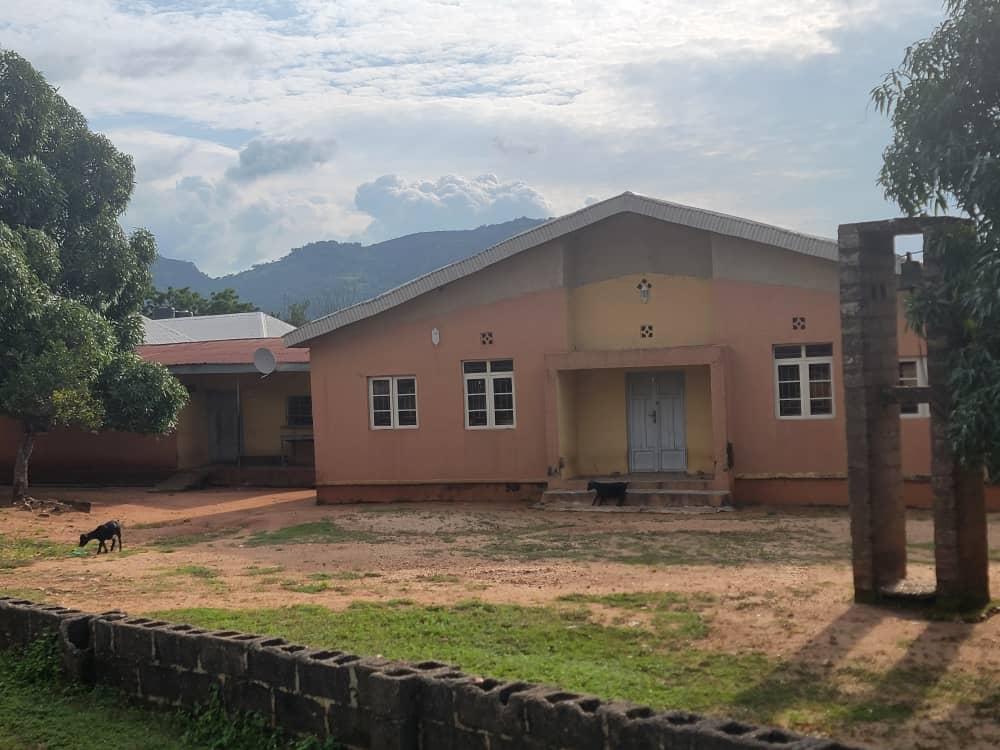
Present-day building: First Baptist Church, Takete-Ide — modern church sanctuary surrounded by the natural topography of the community.
1. The Birth of the Baptist Mission
In the early decades of the twentieth century, Christian missionary activity in the Yagba area presented baptism as the decisive mark of full acceptance of the Gospel of Jesus Christ. The original account explains that baptism signified that a believer had embraced Biblical teaching and departed from past practices. One central requirement emphasized by the early Sudan Interior Mission (SIM) missionaries was the doctrine of one man, one wife (strict monogamy).
A number of men in the community who responded positively to the Christian message were already in polygamous family arrangements according to traditional custom. The SIM missionaries required candidates to separate from wives as a condition for receiving water baptism. While some converts made this difficult sacrifice, others were unwilling to dissolve established matrimonial unions.
In 1922, Rev. Tommie Titcombe visited Takete-Ide while preparations were underway for an early baptismal service. He reiterated the SIM requirement of one wife before baptism. Rather than abandoning Christianity or returning to their former way of life, a committed group led by Pa Joash Agunbiade resolved to associate with the Baptist Mission, which was already firmly established in nearby Mopa.
2. Founding of First Baptist Church — 1922
In November 1922, six men, acting in concert with the steadfast cooperation of their wives, formally established the First Baptist Church in Takete-Ide.
The new congregation organized regular Christian worship services, prayer meetings, and mutual support, establishing a distinct denominational fellowship that grew rapidly into an integral pillar of community life.
3. The Six Founders
Historical records document six founding fathers who, with their wives, established the church in November 1922:
Pa Joash Agunbiade
Founder & Baba Egbe
Led the group that embraced the Baptist Mission.
Pa Luke Olorunleke
Founder & Church Leader
Served as early Church Leader.
Pa Paul Amora
Founder
Co-founded the congregation with the cooperation of his wife.
Pa Saul Akedi
Founder (Baba Eleah)
Canonical community spelling recorded as Baba Eleah.
Pa Noah Omoyele
Founder
Listed among the six founders; subsequent passage mentions Noah Eseyin as Secretary.
Pa Alfred Eseyin
Founder (Baba Owa)
Last surviving founding member; renowned for deep spiritual devotion.
Office Bearers: The source records that Pa Joash Agunbiade served as Baba Egbe, and Pa Luke Olorunleke served as Church Leader. A subsequent paragraph identifies Noah Eseyin as Church Secretary (see verification note regarding the relationship between the names Pa Noah Omoyele and Noah Eseyin).
4. Early Worship Places and Church Buildings
The congregation’s physical journey reflects the resilience and resourcefulness of its early members:
Initial Location & Mud Seats
At the first site, the close proximity to the SIM (ECWA) place of worship led to a mutual decision to relocate to avoid disturbing concurrent services. The congregation erected a mud building with hand-fashioned mud seats due to lack of funds for wooden benches.
Thatched Roof to Corrugated Iron
The church later moved to its permanent present location, constructing an auditorium with a thatched roof. In 1959, through collective community contributions, the thatched roof was replaced with durable corrugated iron sheets.
Modern Church Auditorium
In the mid-1980s, growing membership necessitated the construction of the spacious modern auditorium that stands on the church grounds today.
5. Early Pastoral Support
In its formative years, First Baptist Church received vital pastoral guidance from visiting and resident ministers from neighbouring regions:
- • Rev. Margi (c. 1924): An Igede Baptist minister who visited the young church regularly for one to two weeks at a time, sleeping inside the small auditorium.
- • Rev. Agbode (1925): Also from Igede; arrived in 1925 as the church’s first resident pastor.
- • Subsequent Early Pastors: Pastor Olaleken, Pastor David Otitodun, and Pastor Adeosun.
- • Teacher-Pastors: Primary-school teachers posted to Takete-Ide who also served the pulpit, including Pastor Ajibade from Oyo State and Pastor Falana from Ekirin-Adde.
- • Student Pastors: Pastor Adetunji from Saki, Oyo State, who served as student pastor for three months.
6. Pastoral Leadership, 1982–1990
The manuscript documents a significant period of pastoral transition involving traditional and ordained leaders:
HRH Oba Philip Ebilakun
1982–1985 & 1988–1990HRH Oba Philip Ebilakun, the reigning Olude of Takete-Ide at the time of the source account, served as Church Pastor from 1982 to 1985. Following the tenure of Rev. Oyekunle (1985–1988), Oba Ebilakun stepped in once again to lead the church as pastor from 1988 to 1990.
Rev. Oyekunle
1985–1988Served as Church Pastor between Oba Ebilakun’s two pastoral tenures, ministering to the congregation during an important era of expansion.
Rev. Agbogun
Inducted Aug 1990; Ordained 14 Nov 1990Inducted as Church Pastor in August 1990 and ordained as a full minister on 14 November 1990, continuing his pastoral service up to the time the source account was written.
7. Aiyedayo Road and Church Land
As Takete-Ide expanded, community leaders identified the need for a direct access road connecting the Otafun/Aghara and Takete-Ide/Aiyede axes toward Oroke (Aiyedayo). The original direct alignment would have intersected directly in front of the local primary school’s main gate, creating safety concerns for schoolchildren.
Community leaders approached First Baptist Church for permission to route the new road through its land holdings farther away from the school gate. In a spirit of civic cooperation, the church agreed. The land was partitioned, with one portion bordering the property of Pa Joash Agunbiade on the Oke Adan side, and another remaining on the present church premises.
From its early demarcation, the church land shared boundaries with Pa Agunbiade on the Oke Adan side, with Pa Elehire on the Olorunsogo side, extending toward the Oke-Ako bypass near the house of Baba Ajayi Yeloyejo.
8. Growth and the Legacy of Pa Alfred Eseyin (Baba Owa)
Among the six founders, Pa Alfred Eseyin (popularly revered as Baba Owa) was the last surviving patriarch. He left an indelible spiritual and cultural mark on generations of church members.
Baba Owa was renowned for his unwavering devotion, attending early-morning prayer vigils at 5:00 a.m., evening prayer services, regular Sunday worship, and actively teaching Sunday School classes. When invited to give the closing prayer, he concluded consistently with a memorable invocation:
“Bope wani, bo yawa ni, odo Re na lanmbo wa simi. Kiwa kabo ka le je omo odo rere lodo Re, ni oruko ti Jesu Kristi Oluwa wa. Amin.”
(Translation concept: “Whether late or early, unto You we shall return to rest. May our homecoming find us as faithful servants before You, in the name of Jesus Christ our Lord. Amen.”)
9. The Church Farm
From its early years, First Baptist Church instituted a communal agricultural initiative known as the Church Farm.
Fridays were customarily dedicated for congregation members—men and women alike—to labour together on the church farm. Proceeds from the sale of harvested farm produce were channelled directly into funding church administration, missionary hospitality, and maintenance of church properties, demonstrating the community’s self-reliance.
10. Later Leadership & Community Stalwarts
As the founding generation aged and passed on, their children and subsequent members assumed stewardship. The historical record commemorates the following prominent leaders of blessed memory:
Archival Photography
11. Historical Gallery
Authentic community photographs of First Baptist Church premises and grounds.
First Baptist Church Building
Present-day sanctuary building in Takete-Ide.
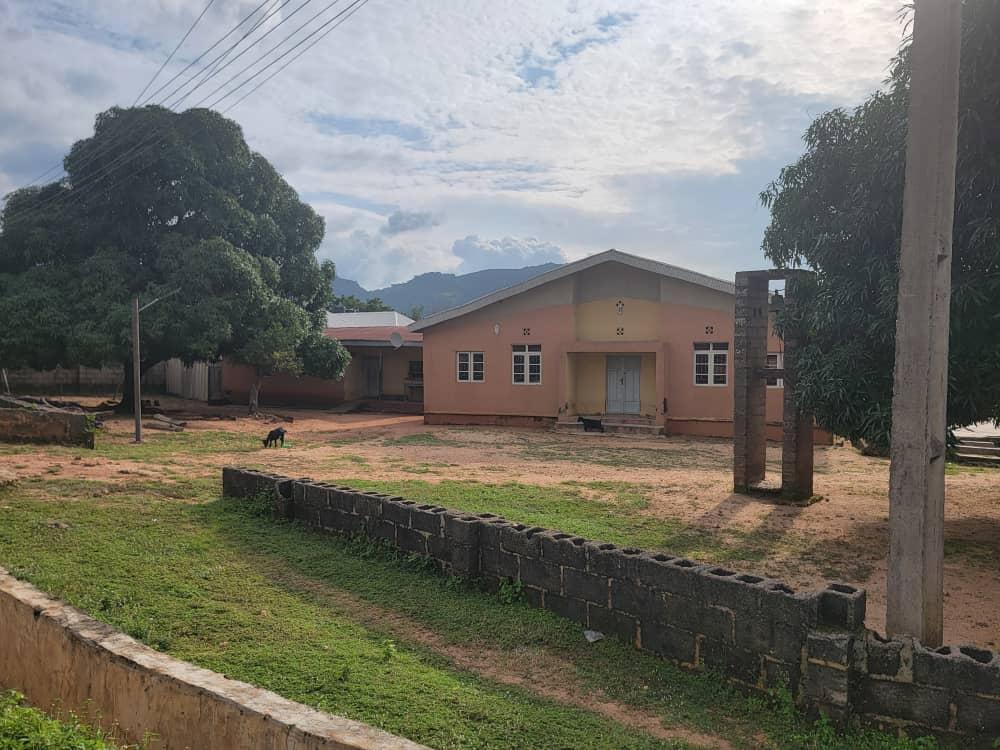
Church Grounds & Compound
Surrounding church grounds and landscape in Takete-Ide.
12. Sources & Archival Provenance
This historical narrative is transcribed and edited from a preserved two-page written historical account of First Baptist Church, Takete-Ide, supplied to the community digital archive.
In keeping with the project’s historical accuracy standards, spelling variations, dates, and leadership records remain under continuous review with church registers and community elders.